


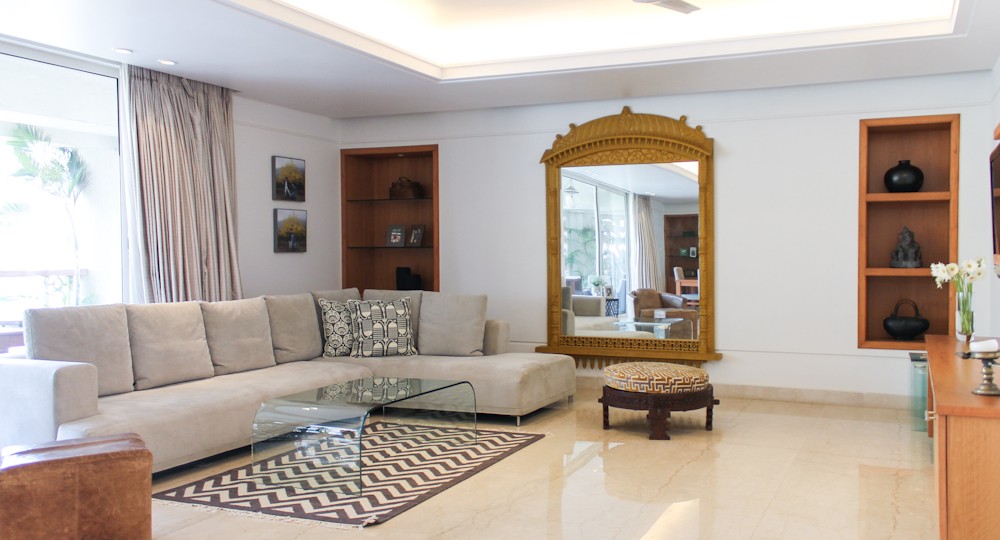
1. Background of the Home
This case study is based on a typical 2BHK apartment of around 900–1,000 sq ft.
The homeowners wanted a fresh, clean look without changing the entire interior.
Their priority was to improve appearance, correct functional issues, and keep long-term maintenance simple.
The overall budget was kept modest, so the work focused on practical upgrades instead of full renovation.
2. Key Areas That Were Upgraded
a. Walls and Paint
* The walls showed uneven patches and dull colours.
* A fresh coat of paint was chosen as the first step because it gives maximum visible improvement at lower cost.
Choices made
- Washable finish only in living room and dining
- Simple putty touch-ups instead of full rework
Why it works:
Painting renews the space quickly and suits most Indian apartments.
b. Lighting Improvements
The existing lights were either too dim or too harsh.
Changes done
* Replaced warm tube lights with LED panels
* Added basic spotlights near TV unit and dining wall
* Avoided false ceiling to control cost
Result:
Rooms looked brighter and more welcoming without major civil work.
c. Soft Furnishings
Furniture remained the same due to budget limits, but small additions improved the look.
Upgrades
* New curtains in neutral tones
* Simple rugs for the living area
* Cushion covers with muted patterns
* These items were chosen because they are easy to replace and maintain.
d. Storage and Organisation
Instead of building new cabinets, the focus was on decluttering.
Steps taken
* Removed unused décor pieces
* Added small storage baskets in wardrobes
* Reorganised kitchen shelves
* This created more usable space without spending much.
e. Kitchen Touch-Ups
The kitchen was functional but visually dated.
Low-cost improvements
* Changed cabinet handles
* Replaced countertop lights
* Added a simple open shelf for daily items
* No major carpentry was done.
f. Bathroom Refresh
Bathrooms were not renovated, but minor repairs improved hygiene and usability.
Changes
* New faucets in key places
* Basic glass shelf added
* Deep cleaning and re-grouting
* This gave a cleaner and newer look without breaking the budget.
3. Budget Breakdown (Approximate Ranges)
Every city has different labour rates, but this is a general idea based on metro and tier-2 averages.
* Painting: Low to mid-range, depending on putty work
* Lighting: Moderate, based on number of fixtures
* Soft furnishings: Flexible, can be adjusted
* Small repairs: Usually minimal
* Kitchen and bathroom hardware: Mid-range if using reliable brands
* Major carpentry, wall-breaking, and modular work were avoided to keep the expenses controlled.
4. What Made the Makeover Successful
Clear Priorities
The homeowners focused on items that give visible improvement: paint, lighting, textiles, and organisation.
Minimal Structural Changes
No demolition or major carpentry was involved, which reduced labour cost and time.
Practical Material Choices
All selections were easy to maintain and suited for daily Indian usage.
Reusing Existing Furniture
Instead of replacing sofas, beds, or wardrobes, the focus was on refreshing the surroundings.
5. Common Mistakes to Avoid in Budget Makeovers
Trying to change too many things at once
Choosing complicated false ceilings or heavy wallpapers
Buying new furniture when simple repairs can extend its life
Ignoring lighting, which affects the entire look of the home
Using strong colours without checking room size and natural light
6. Final Thoughts
A budget makeover does not require major construction work.
Small, thoughtful upgrades often create more impact than large investments.
By prioritising paint, lighting, and organisation, homeowners can transform their space in a practical and cost-efficient way.
This case study reflects what many Indian families prefer—simple improvements, manageable costs, and long-term usability.

