


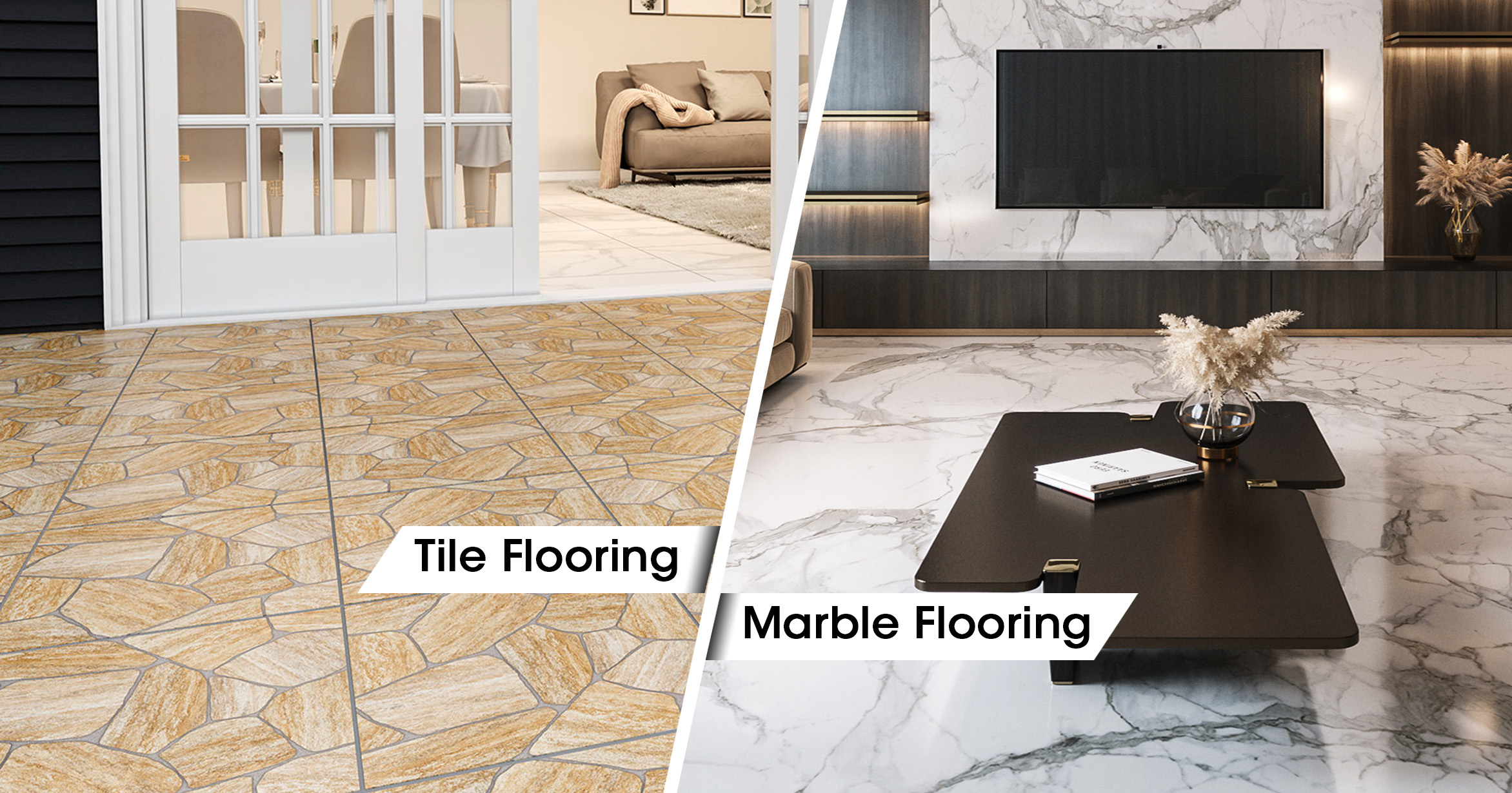
Tiles are man-made flooring materials (ceramic, porcelain, vitrified) that come in many colours, patterns, and finishes — from wood look to stone look. Marble is a natural stone with unique veins and patterns that gives a high-end luxurious finish.When homeowners plan flooring, the most common question is whether to choose tiles or marble. Both materials have their own strengths, limitations, and maintenance needs. The right choice depends on the home size, lifestyle, climate, and budget. This guide explains the difference between tiles and marble in a simple and practical way so that homeowners can make confident decisions.
1. What are tiles and what are marbles?
Tiles
- Tiles are factory-made products. Most tiles used in Indian homes are ceramic or vitrified.
- They come in fixed sizes, thickness, and design patterns.
Marble
- Marble is a natural stone. It is cut into slabs and polished at site.
- Each piece has natural grain variations and unique patterns.
- This basic difference affects cost, appearance, installation, and long-term care.
2. Key differences: Practical comparison
A. Appearance
- Tiles: Uniform colour and pattern. Good for modern homes that need a clean, consistent look.
- Marble: Natural grains and depth. Gives a richer, more organic feel. No two pieces look the same.
B. Durability
- Tiles: Vitrified tiles are strong and handle daily wear well. They resist scratches better.
- Marble: Durable but softer than vitrified tiles. Can chip or scratch if heavy objects are dragged.
C. Maintenance
- Tiles: Low maintenance. Simply mopping is enough.
- Marble: Needs periodic polishing to maintain shine. Absorbs stains if not sealed properly.
D. Water and stain resistance
- Tiles: Highly water-resistant. Suitable for kitchens, balconies, wash areas.
- Marble: Porous. Can absorb liquids, especially turmeric, tea, and oil.
E. Cost
- Costs vary widely based on brand, grade, and labour.
- Tiles: More budget-friendly. Labour and installation cost is predictable
- Marble: Higher material cost, higher installation cost, and additional polishing cost.
F. Installation
- Tiles: Faster installation. Less mess.
- Marble: Slower installation due to cutting and polishing at site.
G. Weight
- Tiles: Lighter; suitable for all floors including apartments.
- Marble: Heavier; check feasibility in older buildings.
3. Importance of choosing the right flooring
1. Long-term maintenance
Flooring is not changed frequently. Choosing a material that suits your lifestyle reduces future maintenance. Busy households benefit from low-maintenance tiles. Homes with careful usage can consider marble.
2. Slip resistance
Some tiles come with anti-skid finishes. Marble becomes slippery when polished or wet. This matters for homes with kids or elders.
3. Climate impact
In hot climates, marble stays cooler. In humid areas, vitrified tiles resist moisture better.
4. Interior design consistency
Tiles come in many sizes and finishes, making them easier to match with furniture and wall colours. Marble is best for large spaces where natural grains can be showcased.
5. Budget planning
Tiles help control cost because both material and labour charges are predictable. Marble projects often exceed initial budgets because polishing and cutting require skilled labour.
4. Where tiles work best
- Apartments with limited space
- Kitchens, utility, balconies
- Rental properties
- Homes wanting uniform flooring with less maintenance
- Places where installation speed is important
5. Where marble works best
- Large living rooms and open layouts
- Premium homes with skilled maintenance support
- Spaces where natural stone grains add character
- Homes with design themes requiring earthy, organic materials
6. Common mistakes to avoid
- Polishing marble too much, making it slippery.
- Choosing glossy tiles in high-traffic or wet areas.
- Using low-quality tile adhesives.
- Mixing marble and tiles without considering thickness difference.
- Not sealing marble properly after installation.
7. Quick summary table
|
Feature |
Tiles |
Marble |
|
Material |
Factory-made |
Natural stone |
|
Cost |
Lower |
Higher |
|
Maintenance |
Low |
Needs polishing |
|
Water resistance |
High |
Medium |
|
Appearance |
Uniform |
Natural variations |
|
Installation |
Fast |
Slow |
|
Suitability |
Most areas |
Large, premium spaces |
Conclusion
Both tiles and marble are good options, but they suit different needs. Tiles are practical, affordable, and easier to maintain. Marble offers natural beauty but comes with higher cost and upkeep. The best choice depends on budget, room size, lifestyle, and willingness for maintenance.
Why Choose Our Interior Studio to Decide Between Tiles and Marble?
At our interior studio, we help homeowners choose between tiles and marble based on lifestyle, budget, and long-term maintenance needs. In Indian homes, flooring faces heavy daily use, moisture, and frequent cleaning. Our guidance ensures the selected material performs well under real conditions, not just looks good in showrooms.
We consider factors such as room usage, slip resistance, durability, and ease of maintenance before recommending tiles or marble. Proper material selection improves safety, longevity, and overall appearance. With our professional interior expertise, flooring choices remain practical, cost-effective, and well-suited to Indian living patterns.

