


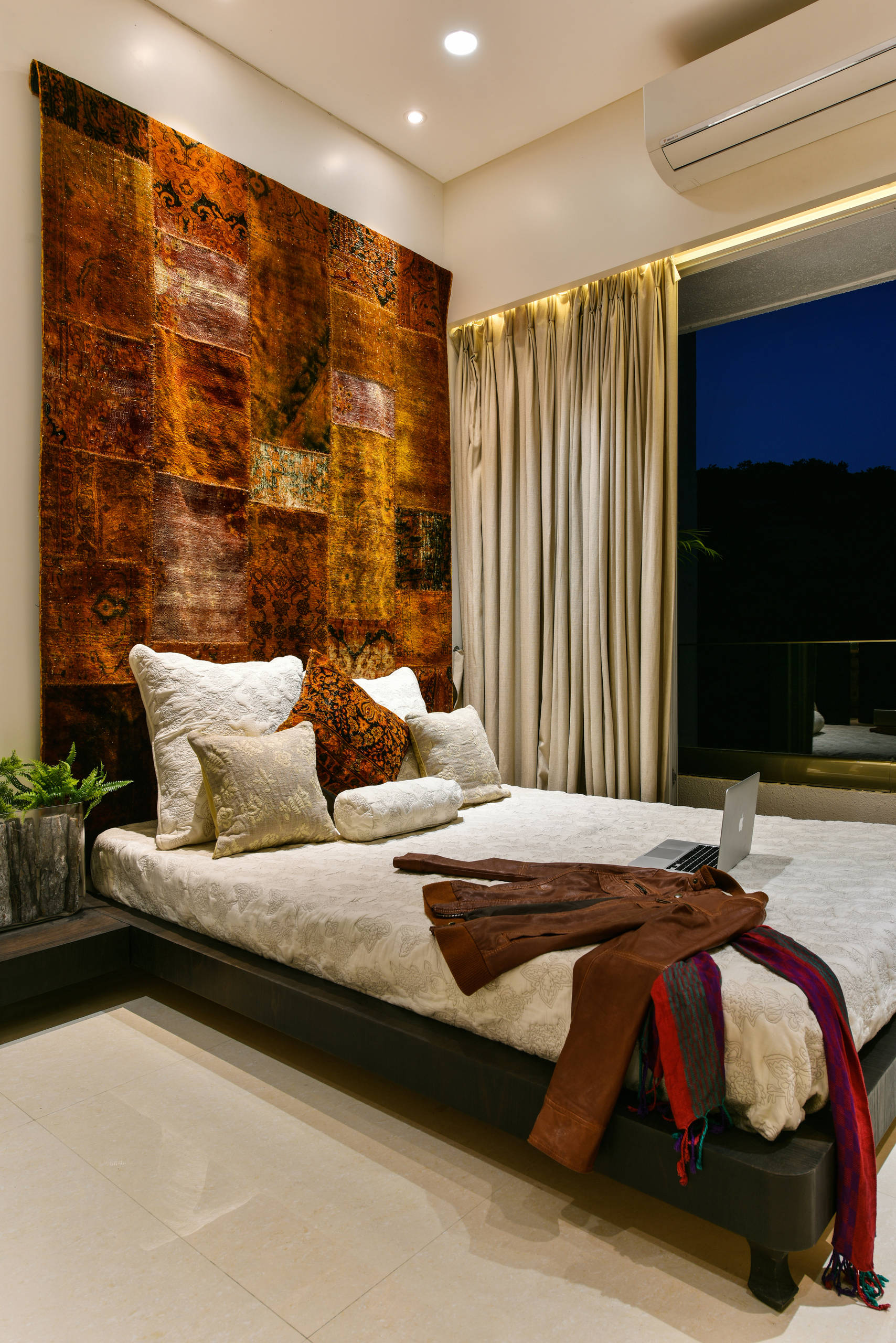
Bedroom wall design plays an important role in creating a calm and comfortable space. In Indian apartments, bedrooms are often compact, and the walls need to balance appearance, durability, and easy maintenance.
This guide explains practical bedroom wall design ideas that work well in Indian homes, considering space limitations, ventilation, and long-term use.
1. Plain Painted Walls for a Clean Look
A simple painted wall is one of the most practical choices for most Indian homes.
Benefits
- Affordable and easy to refresh every few years.
- Works well in small rooms since it does not add visual weight.
- Helps create a calm backdrop for furniture.
Practical tips
- Use matte or satin finishes to reduce reflections.
- Light colours help make small bedrooms appear larger.
2. Accent Wall Behind the Bed
- The wall behind the bed is the most commonly used area for a feature design.
- It focuses attention on one side while keeping the rest simple.
- Suitable for small and medium bedrooms.
- Simple wallpaper
- Wooden or laminate panel
- Fabric panel sections (easy to clean if used sparingly)
- Maintenance note
Avoid deep grooves or heavy textures, as they catch dust and are difficult to clean.
3. Wallpaper for Soft Patterns
Wallpaper adds subtle pattern without major construction work.
When to use
- If the bedroom needs a gentle decorative finish.
- When you want to highlight only one wall.
Selecting the right wallpaper
- Choose moisture-resistant options in humid cities.
- Light patterns suit compact rooms; bold prints suit larger walls.
Wallpaper is easier to update after a few years compared to panelling.
4. Wooden or Laminate Panels for Warmth
Wood-finish walls add warmth and a soft visual feel.
Benefits
- Creates a cosy environment.
- Works well behind the bed or around TV units in larger bedrooms.
Practical advice
- Use laminate instead of natural veneer for easier maintenance.
- Avoid covering full walls in very small rooms, as it may make the space feel closed.
5. Fabric Panels for a Soft, Comfortable Look
Soft panels on the bed wall improve comfort and reduce hard surfaces.
Where it fits
- Master bedrooms.
- Rooms where sound absorption is helpful.
Notes
- Use light, washable fabrics.
- Limit panelling height to 4–5 feet for easy cleaning.
6. Built-In Shelves or Niches
A niche on the wall adds storage without using floor space.
Suitability
- Useful in compact apartments.
- Works best on non-plumbing walls.
Considerations
- Keep shelf depth between 6–10 inches.
- Use simple straight lines for easy dusting.
7. Stone or Tile Cladding (Use Sparingly)
Stone or tile finishes add texture but must be used carefully in bedrooms.
Recommended use
- Only on one side, usually the bed wall.
- Use lighter stone patterns for low-light rooms.
Maintenance
- Not suitable for very small bedrooms.
- Avoid heavily porous stones to reduce cleaning issues.
8. Headboard Extensions
The headboard can be extended to cover a part of the wall to create a unified look.
Types
- Upholstered extension
- Wooden back panel
- Laminate with narrow grooves
Advantages
- Gives a clean and structured design.
- Suitable for both small and medium bedrooms.
Standard Measurements to Keep in Mind
- Bed wall width: Typically 8–12 feet in Indian apartments.
- Panel height behind bed: 3–5 feet depending on design.
- Niche depth: 6–10 inches.
- Wallpaper roll coverage: Around 50 sq. ft. per roll.
- Correct measurements help avoid over-designing the wall.
Common Mistakes to Avoid
- Too many colours or textures on all walls. It makes small rooms feel cluttered.
- Dark colours in low-light bedrooms without compensating lighting.
- Heavy 3D panels that collect dust and require frequent cleaning.
- Blocking electrical points with fixed panelling that cannot be accessed later.
Maintenance Tips
- Repaint every 3–4 years for a fresh look.
- Clean wallpaper with a dry cloth or mild solution, depending on type.
- Polish or clean laminate panels once in a while to avoid dullness.
- Keep headboards dust-free, especially fabric ones.
FAQs
1. Which bedroom wall design is best for Indian apartments?
Painted walls with a simple accent design are most practical due to easy maintenance and cost effectiveness.
2. Is wallpaper durable in Indian weather?
Yes, if moisture-resistant wallpaper is chosen, especially for coastal or humid cities.
3. Can I use wooden panelling in a small bedroom?
Yes, in moderation. Keep it on one wall and use lighter finishes.
4. What is the easiest design to maintain?
Plain painted walls and laminate panels require the least maintenance.
Conclusion
Bedroom wall design should support comfort, easy maintenance, and long-term usability. For Indian apartments, simple surfaces, subtle accents, and practical materials work best.
By choosing finishes carefully and keeping the design balanced, homeowners can create a pleasant bedroom environment without unnecessary complexity or cost.
Why Choose Our Interior Studio for Bedroom Wall Design?
At our interior studio, we design bedroom walls that offer long-term comfort, durability, and visual balance. We study room size, bed placement, lighting positions, and daily usage before suggesting wall treatments. This ensures the design feels comfortable over time and does not overwhelm the space.
Our team selects materials, textures, and finishes that suit Indian living conditions and are easy to maintain. Proper planning avoids issues like excessive patterns, poor lighting interaction, or early wear. With our professional interior expertise, bedroom wall designs remain practical, calming, and timeless.

