


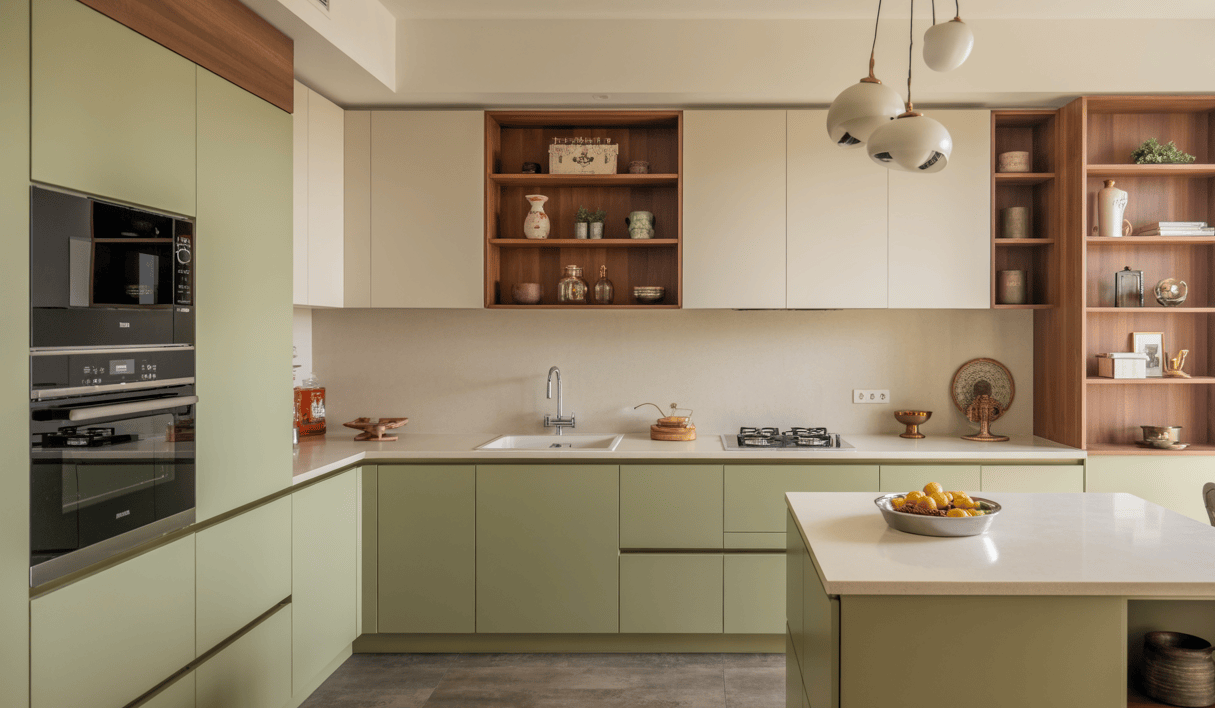
Choosing the right kitchen colour combination is an important step in both new installations and renovations. Colours influence how spacious the kitchen feels, how easily it can be maintained, and how well it blends with the rest of the home. The ideas below are based on real-site experience and practical concerns faced by Indian homeowners.
Why Colour Selection Matters
Colour selection matters in interior designing because it directly affects how a space looks, feels, and functions. The right colours can make a room appear larger, brighter, and more welcoming, while poor colour choices can make it feel dull or cramped. Colours also influence mood—soft tones create calmness, warm shades add energy, and neutral colours bring balance. In addition, proper colour selection helps highlight design elements, match furniture and lighting, and maintain harmony throughout the home.
Key considerations
- Amount of natural light
- Size of the kitchen (8×10 ft, 10×12 ft are common)
- Type of finish (laminate, acrylic, PU, membrane)
- Long-term cleaning effort
- Surrounding wall tiles and countertop material
- Balanced colours help the kitchen feel organised and comfortable.
1. White and Wood Combination
This is a common and practical choice in Indian apartments.
Why it works
- White keeps the space bright
- Wooden tones add warmth
- Works well with granite counters and simple tiles
- Easy to match with future upgrades
- Where it suits
- Small kitchens with limited daylight.
2. Grey and White Combination
Grey gives a clean look without reflecting too much dirt.
Benefits
- Grey base units hide stains better
- White wall units maintain brightness
- Neutral tones suit both modern and traditional homes
- Practical note
- Choose mid-tone grey to avoid a dull appearance.
3. Beige and Brown Combination
Beige is soft and easy to maintain in Indian cooking conditions.
Why homeowners prefer it
- Does not show fingerprints easily
- Works well with cream or brown wall tiles
- Gives a warm and settled look
- Best for
- Families who want a low-maintenance finish.
4. Mint Green with White
Soft green adds freshness without being flashy.
Advantages
- Light green reduces visual clutter
- Matches well with white tiles and quartz counters
- Helps small kitchens feel calm
- Maintenance tip
- Avoid very light pastel if the kitchen has deep-frying on a daily basis.
5. Navy Blue with White or Grey
A deeper colour adds character when used carefully.
Works well when
- The kitchen has good ventilation
- There is enough natural or artificial lighting
- Only lower cabinets use the dark colour
- Upper units should remain light to avoid a heavy look.
6. Charcoal and Wood Combination
Charcoal creates a more grounded appearance.
Why it suits modern homes
- Gives a structured look
- Wood softens the dark colour
- Effective in medium to large kitchens
Note
Use matte finishes to reduce fingerprints.
7. Soft Yellow with White
Yellow brings brightness without being overly bold.
Advantages
- Well suited to East or North-facing kitchens
- Makes the space feel lively
- Works well with white or beige tiles
- Avoid very bright yellows, as they may reflect too much light.
8. All-White Kitchen
An all-white kitchen creates a clean look.
Pros
- Reflects maximum light
- Works well in compact kitchens
- Pairs easily with any countertop
Cons
- Requires regular cleaning
- Best paired with matte surfaces for easy maintenance
- This combination suits homeowners comfortable with frequent cleaning.
How to Choose the Right Combination
Focus on usage and daily cleaning habits rather than trends.
Steps to follow
-
Assess lighting – A dark kitchen needs lighter combinations.
-
Check size – Small kitchens benefit from bright upper cabinets.
-
Match with countertop – Black galaxy, steel grey, and white quartz coordinate well with most colours.
-
Consider tile colour – Wall tiles should not clash with cabinet tones.
-
Think long-term – Avoid colours that may feel too strong over time.
Good colour combinations should remain comfortable even after many years of use.
Common Mistakes to Avoid
- Choosing very glossy dark colours that show smudges
- Mixing too many colours without balance
- Ignoring the flooring shade
- Selecting colours based only on showroom lighting
- Always check samples in your actual kitchen light before finalising.
Final Thoughts
Kitchen colour combinations should support both the look and function of the home.
Simple, stable colours work better for Indian households where cooking involves heat, oil, and regular washing.
By matching colours with lighting, countertop materials, and daily usage, homeowners can create a kitchen that stays pleasant and easy to maintain for many years.

