


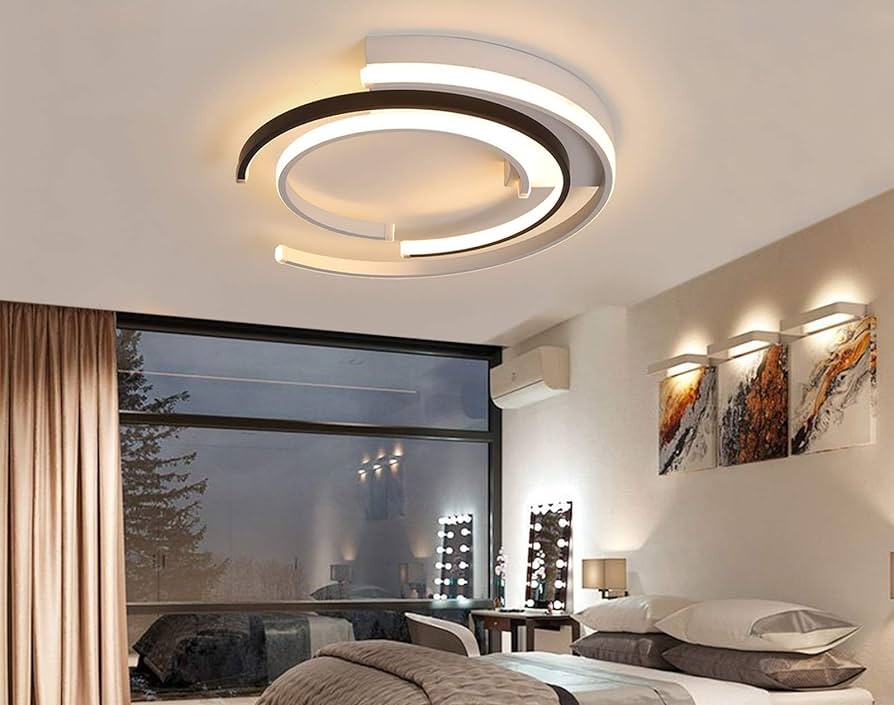
Lighting in a home should balance appearance, function, and comfort.
In most Indian homes, the right lighting depends on three factors:
Purpose of the room
Natural light available
Ceiling height and room size
Use a mix of ambient, task, and accent lighting to create balanced illumination.
Lighting Guide for Each Room
Living Room
The living room needs flexible lighting for daily use, guests, and relaxation.
What works well
Warm white ceiling lights (2700K–3000K) for a soft, welcoming tone.
Downlights or concealed LED strips to create even light without glare.
Floor lamps or table lamps near seating areas for reading or soft evening light.
Optional: Cove lighting if the ceiling height allows.
Practical tips
Avoid very bright white lights (cool white). It looks harsh for living spaces.
Maintain uniform brightness to avoid shadows.
Dining Area
Dining spaces look best with warm, focused lighting.
What works well
Pendant light above the dining table (hung 30–36 inches above tabletop).
Warm white tone to make food look appealing.
Soft ambient light around the area if the dining is part of an open living room.
Practical tip
Choose a simple design that is easy to clean. Grease can settle on decorative fixtures.
Kitchen
The kitchen needs clear, bright, task-focused lighting.
What works well
Warm or neutral white (4000K) for better visibility
LED panel light or tube light for general lighting.
Under-cabinet LED strips to brighten the countertop while cooking.
Avoid warm yellow lights as they reduce clarity.
Practical tip
Place lights in front of the person, not behind, to avoid shadows on the worktop.
Bedroom
Bedrooms need calm, soft lighting that promotes relaxation.
What works well
Warm white ambient lights
Bedside lamps or wall sconces for reading
Concealed cove lighting for a peaceful night atmosphere
Dimmable lights if your budget allows
Practical tip
Keep the main ceiling light soft; very bright lighting can disturb sleep.
Bathroom
Bathrooms require bright and safe lighting.
What works well
Neutral white lights (4000K) for clarity.
Ceiling-mounted LED panel or downlights.
Mirror lights for grooming tasks like shaving or makeup.
Use water-resistant (IP-rated) fixtures near wet areas.
Practical tip
Avoid yellow lights in the bathroom; they make the mirror area dull.
Balcony
Balcony lighting should be simple and weather-resistant.
What works well
Warm white wall lights for a calm outdoor feel.
LED strip lights inside railing or planters if needed.
IP-rated outdoor fixtures to handle dust and rain.
Practical tip
Avoid bright white lights; warm tones make balconies look cosy.
Study Room / Workspace
This space needs focused lighting for productivity.
What works well
Cool white or neutral white (4000K–5000K) for concentration.
Desk lamp with adjustable direction.
Shadow-free overhead light.
Practical tip
Ensure the desk lamp does not reflect on your laptop screen.
Common Mistakes to Avoid
Using one central light for the whole room. It creates shadows.
Choosing only warm yellow lights for the entire home. Not suitable for kitchens or work areas.
Installing decorative lights that are difficult to clean.
Ignoring brightness (lumens)—not just wattage.
Forgetting about switch placement and multi-switch control for flexibility.
Choosing Colour Temperatures
Warm White (2700K–3000K) – Living, bedroom, dining
Neutral White (3500K–4000K) – Kitchen, study
Cool White (5000K+) – Not recommended for homes except specific tasks
Final Thoughts
Good lighting should feel natural and comfortable.
Choose fixtures that give enough brightness without causing glare. Think about how you use each room throughout the day. When lighting is planned well, even a simple home feels larger, cleaner, and more functional.

