


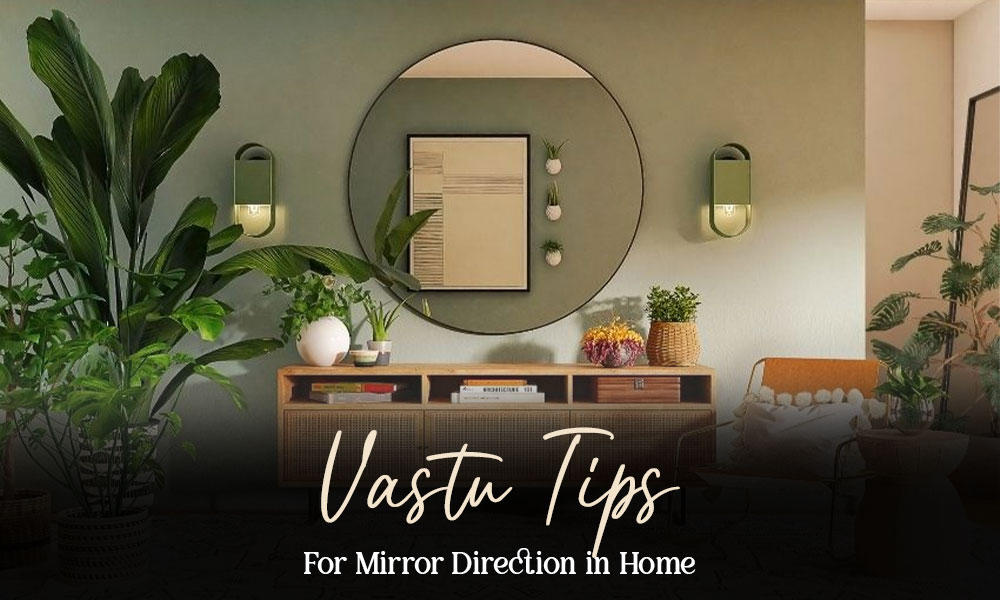
Vastu Compass Guide (Hindu Tradition)
Mirrors play an important role in Vastu because they reflect light, movement, and energy inside a home. When placed thoughtfully, they help improve brightness and create a sense of space. When placed incorrectly, they may cause discomfort, overstimulation, or disturbed sleep.
This guide explains practical mirror placement for Indian homes, keeping everyday usability and maintenance in mind.
1. General Vastu Principles for Mirrors
1. Use Mirrors to Reflect Light, Not Clutter
- A mirror should reflect open space, natural light, or clean areas.
- Avoid placing it where it reflects dustbins, shoe racks, or unfinished corners.
2. Keep Mirrors at Comfortable Eye Level
- The mirror centre should be around 4 ft to 5 ft above the floor.
- Too high or too low placement looks awkward and disturbs proportions.
3. Ensure the Mirror Has a Clear Boundary
- Mirrors with frames or neat edges feel more grounded and stable.
- Avoid damaged or chipped mirrors.
2. Recommended Directions for Mirror Placement
1. North and East Walls
- These directions are generally suitable for mirrors.
- They help increase natural light and create a sense of openness.
2. Living Room Mirrors
- Mirrors in the living room are usually fine if they reflect clean spaces, plants, or daylight.
- Avoid mirrors that face the main entrance door directly.
3. Dining Area Mirrors
- A mirror near the dining table is acceptable as long as it reflects a tidy area.
- Do not place it opposite the kitchen stove or open shelves.
3. Bedroom Mirror Placement Guidelines
Bedroom mirrors require more caution.
1. Avoid Mirrors Facing the Bed
- A mirror directly facing the bed can cause disturbed sleep because it reflects movement and light.
- In compact apartments, if a wardrobe has a mirror, place it on a side panel instead of the shutter that faces the bed.
2. Use Sliding Wardrobe Mirrors Carefully
- If the room is small, prefer internal mirrors on the wardrobe shutters.
- They stay hidden when not in use.
3. Dressing Table Placement
- A practical position is beside the window or near a corner, not opposite the bed.
- Height should remain around 4 ft to 5 ft.
4. Mirrors in Entryways and Corridors
1. Avoid Mirrors Facing the Main Door
- A mirror directly opposite the entrance is believed to push away positive energy.
- Instead, place it perpendicular to the door if needed.
2. Narrow Corridor Solutions
- Long mirrors can help widen a narrow corridor visually.
- Keep them on the side wall, not at the end of the passage.
5. Bathroom and Washbasin Mirror Vastu
1. Bathroom Mirrors
Bathroom mirrors are acceptable as long as the door is kept closed when not in use.
2. Washbasin Mirrors in Dining Area
- If the washbasin is near the dining area, choose a clean and simple frame.
- Avoid placing the mirror opposite the dining table.
6. Common Mistakes to Avoid
- Using cracked or irregular mirrors
- Placing mirrors behind sofas or beds
- Using too many mirrors in a compact home
- Installing mirrors opposite windows with harsh sunlight
- Keeping mirrors dusty or smudged
- These mistakes affect the overall feel and maintenance of the home.
7. Practical Tips for Modern Indian Homes
1. Full-Length Mirrors in Small Bedrooms
Place full-length mirrors on wardrobe interiors. This saves space and avoids visual disturbance.
2. Mirrors in Living Rooms
- A horizontal mirror above a console table works well in apartments.
- Keep it away from direct harsh sunlight to avoid glare.
3. Frameless vs. Framed Mirrors
- Frameless mirrors suit modern interiors but require clean surroundings.
- Framed mirrors feel more stable in traditional homes.
Final Guidance
Mirror placement should support comfort, brightness, and calmness in the home.
Vastu principles are easier to follow when combined with practical interior planning. A mirror that reflects light, stays at eye level, and avoids direct alignment with the bed or main entrance usually works well for most Indian households.

