


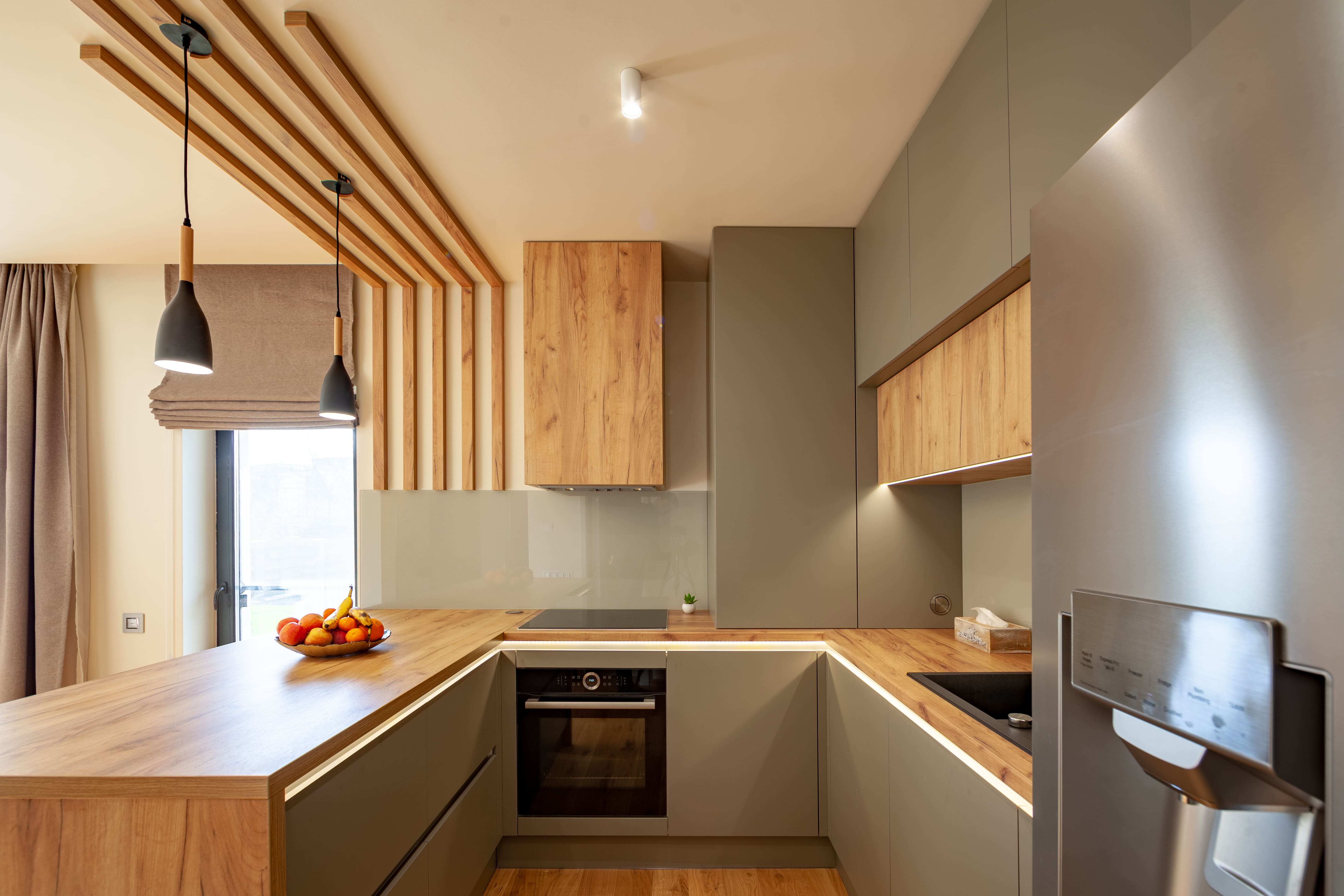
1. Why U-Shape Kitchens Work Well in India
Efficient Movement
The stove, sink, and refrigerator can be placed on three different sides. This reduces movement and helps during heavy cooking.
More Storage The layout allows more lower cabinets, tall units, and overhead storage without making the area crowded.
Suitable for Multiple Users
Two people can work together comfortably if the passage width is planned correctly.
2. Standard Measurements for U-Shape Kitchens
Correct measurements ensure easy movement and safe use of appliances.
- Passage width: 4 ft to 5 ft is ideal.
- Base cabinet depth: 22 inches.
- Overhead cabinet depth: 12–15 inches.
- Countertop height: 34–36 inches.
- Distance between stove and sink: Minimum 2 ft.
These dimensions work well for home cooks and make cleaning easier.
3. Trending U-Shape Kitchen Design Ideas for 2025
1. Two-Tone Cabinets for Balanced Look
Many homeowners are choosing two colours—usually a light shade on top and a medium shade at the bottom.
This helps make the room look bright and spacious.
2. Quartz and Granite Countertops
These materials handle Indian cooking heat, oil, and spices well.
Quartz offers uniform colour, while granite is slightly more durable in long-term use.
3. Handleless Drawers and Cabinets
Clean front panels give a neat appearance and reduce visual clutter.
This works especially well in compact kitchens.
4. Tall Unit for Appliances
A tall tower with space for oven, microwave, and storage keeps the counter free.
Reduces the need for extra shelves.
5. Under-Cabinet Task Lighting
LED strip lights below overhead cabinets help during chopping and cooking.
They reduce shadows on the counter.
6. Corner Accessories for Better Access
Corner units like S-shape pull-outs and carousel trays help use the deep corners effectively.
7. Ventilation-Friendly Designs
Open shelves beside the window or a chimney with fresh-air ducting helps manage heat and smoke.
4. Space Planning Based on Kitchen Size
Small U-Shape Kitchens (6–8 ft width)
- Use light colours to reduce compact feeling.
- Choose more drawers instead of cabinets for easier access.
- Avoid bulky handles.
Medium Kitchens (8–10 ft width)
- Add a tall unit for groceries or appliances.
- Use quartz or granite with minimal joints for easy cleaning.
- Consider a cove light or profile light as a soft design element.
Large U-Shape Kitchens (10 ft+ width)
- Add a breakfast counter on one side if space allows.
- Provide dedicated zones for cooking, prep, and washing.
- Install more task lighting to avoid shadows in larger rooms.
5. Material Choices Suitable for Indian Kitchens
Cabinets
BWR plywood: Reliable for long-term use.
HDHMR boards: Good for shutters and modern finishes.
Shutters
Laminate, acrylic, or PU finish depending on maintenance preference.
Laminate is the most cost-friendly and durable for heavy cooking.
Hardware
Soft-close channels, sturdy hinges, and heat-resistant handles.
Good-quality hardware makes a big difference in daily use.
6. Cost Factors to Consider
Cost varies based on:
- Kitchen size
- Cabinet material
- Finish type (laminate, acrylic, PU)
- Number of drawers and accessories
- Chimney and appliance brand
- Labour rates in each city
- Simple laminate kitchens are more budget-friendly, while acrylic and PU finishes increase the overall cost. Accessories like tall units, magic corners, and soft-close systems also add to the budget.
7. Common Mistakes to Avoid
- Keeping the passage width less than 3.5 ft
- Not planning enough drawers
- Placing the stove too close to the window
- Using open shelves near the cooktop
- Ignoring space for future appliances
- Avoiding proper ducting for the chimney
- These mistakes affect usability and maintenance.
Final Guidance
A well-planned U-shape kitchen improves daily cooking comfort, storage efficiency, and long-term durability. Homeowners should focus on correct measurements, simple materials, and practical layouts instead of complicated designs. The best U-shape kitchens balance appearance with functionality and suit the real needs of Indian households.

