


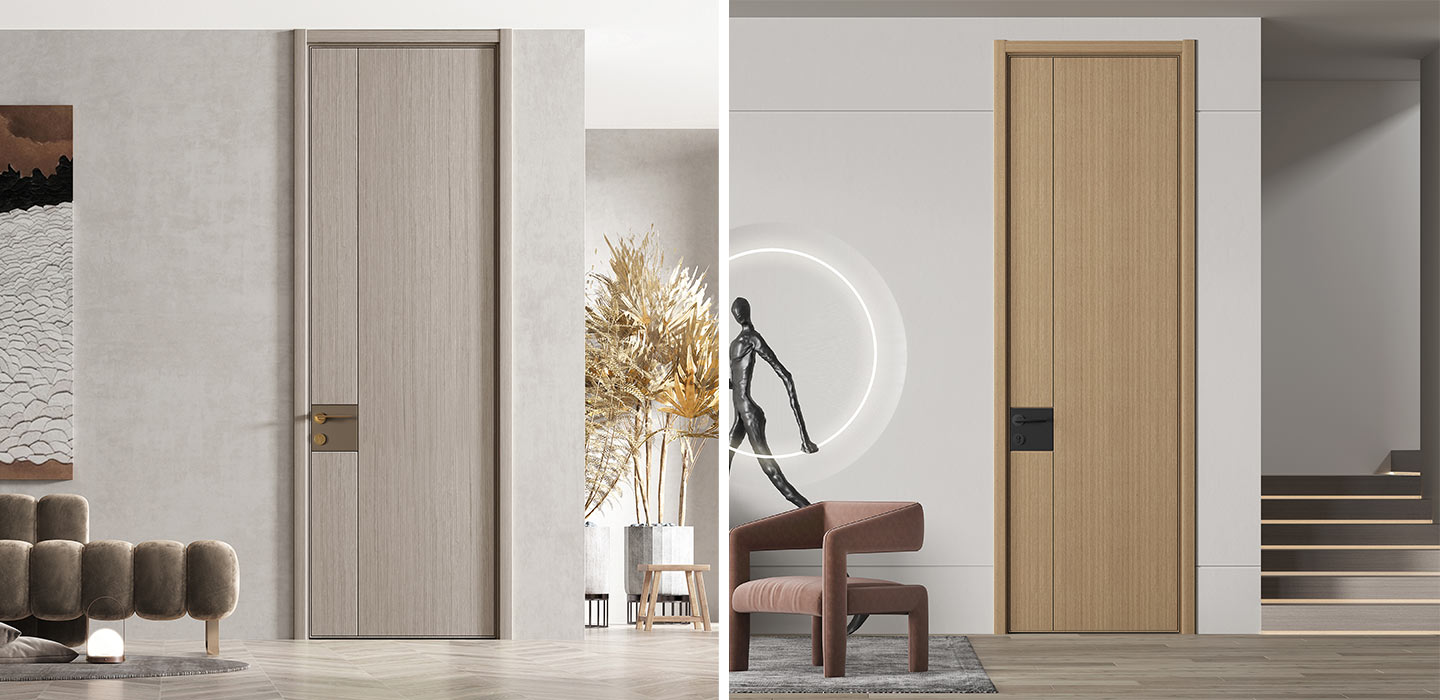
A standard bedroom door in Indian homes is usually 7 feet high and 2.5 to 3 feet wide, ensuring comfortable movement and proper ventilation. Solid wood or engineered wood doors are preferred for privacy and sound insulation. Hinged doors are most common, while sliding doors are suitable for small bedrooms. The door should open smoothly, not hit the bed, and ideally not face the bed directly. Choosing a finish that matches the bedroom interiors helps maintain a clean and balanced look.
The following guide explains the standard bedroom door sizes, measurements, and practical considerations based on common site conditions in India.
1. Standard Bedroom Door Size
Most bedroom doors follow a standard size that works well for everyday use and typical furniture movement.
Common Door Dimensions
- Height: 7 ft (84 inches) — this is the most widely used size in India.
- Width: 2 ft 6 in (30 inches) or 2 ft 9 in (33 inches).
- In larger homes, 3 ft (36 inches) width is used for better movement.
Why These Sizes Work
- Comfortable entry and exit
- Easy to move mattresses, chairs, and luggage
- Suitable for both flush doors and panel doors
- Fits well within typical wall thickness in apartments
2. Door Frame (Chaukhat) Standards
Frame Thickness
- Usually 4 inches to 5 inches, depending on wall thickness.
- Concrete walls in apartments often require 4-inch frames.
- Brick walls or independent houses may require 5-inch frames.
Recommended Materials
- Hardwood: Teak, Sal, or Meranti
- Engineered wood frames for budget-friendly projects
- Avoid untreated softwood in humid cities
3. Door Swing Direction
The swing direction affects comfort, privacy, and furniture placement.
Best Practice
- Door should open inward (into the bedroom).
- This keeps the passage clear and maintains privacy.
Points to Consider
- Ensure the door does not hit the bed or wardrobe.
- Leave at least 3 ft clearance for comfortable movement.
- For small bedrooms, consider a door that opens towards a free wall.
4. Minimum Clearance Requirements
Proper clearances prevent daily inconvenience.
- Door to bed distance: at least 2 ft 6 in
- Door to wardrobe: ensure the wardrobe shutters open fully without obstruction
- Passage width near the door: minimum 3 ft
These measurements help in maintaining smooth movement inside the room, especially in compact apartments.
5. Bedroom Door Materials and Their Practical Use
1. Flush Doors (Most Common)
- Affordable and light
- Works well for most apartments
- Can be laminated or painted
2. Veneer Doors
- Provide a warm, natural look
- Need polishing and slightly higher maintenance
3. Solid Wood Doors
- More durable
- Heavier and costlier
- Usually used in premium homes or independent houses
4. Laminated Doors
- Easy to clean
- Good for families with children
- Resistant to scratches and moisture
6. Hardware Standards
Recommended Fittings
- Hinges: 3 brass or stainless-steel hinges
- Lock: Bedroom privacy lock or cylindrical lock
- Stoppers: Floor-mounted or magnetic stopper
- Door thickness: Typically 35–40 mm
- Good quality hardware improves life and reduces door sagging.
7. When to Consider Sliding Doors
Sliding doors are useful when the room is small or when inward swing causes obstruction.
Best Situations
- Rooms below 100 sq ft
- Narrow passages
- Bedrooms with wardrobes directly opposite the door
Important Note
Sliding doors provide less sound privacy compared to hinged doors.
8. Common Mistakes to Avoid
- Selecting a door wider than the wall can support
- Allowing door to swing against the wardrobe
- Using softwood frames in damp-prone areas
- Not considering mattress or furniture movement
- Installing the door before electrical and floor levels are finalized
Conclusion
Bedroom door standards in Indian homes are straightforward, but choosing the correct size, material, and swing direction makes everyday use more comfortable.
A standard door size of 7 ft × 2 ft 6 in works for most homes, while larger spaces can use wider doors for better accessibility. Careful planning around furniture placement, wall thickness, and room size ensures the door remains functional for years.

