


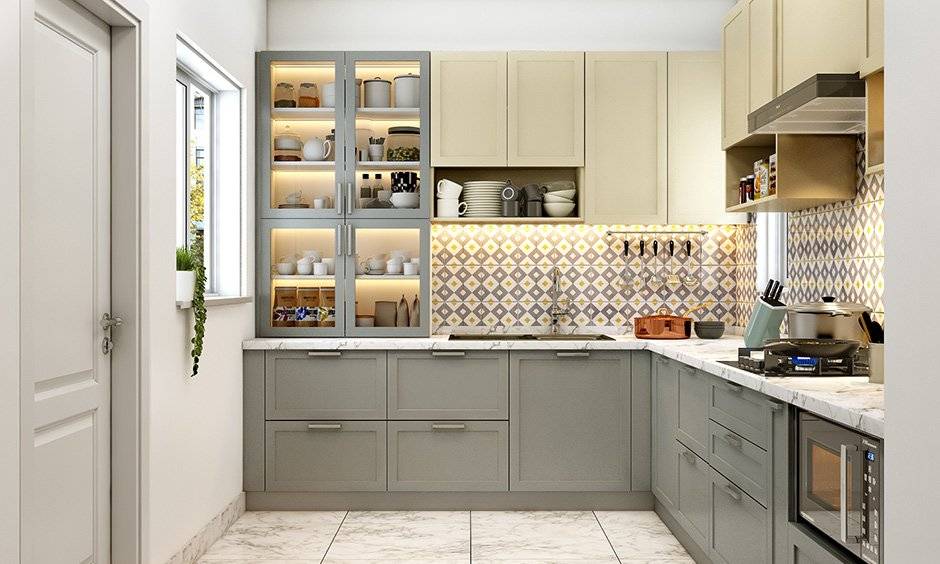
Parallel and L-shape kitchens are popular in Indian homes because they make good use of limited space, improve movement flow, and allow efficient work zones. These layouts work well in both small apartments and larger independent homes. This guide explains the latest design approaches and practical details that help homeowners make informed decisions.
1. Understanding Parallel and L-Shape Kitchens
Parallel Kitchen
A parallel kitchen has two long counters facing each other.
It is suitable for narrow spaces with a width of about 7 to 10 ft.
L-Shape Kitchen
An L-shape kitchen has two counters meeting at a corner.
It works well in square or rectangular kitchens sized 8 × 10 ft or larger.
Both layouts support efficient zoning for cooking, cleaning, and storage.
2. Standard Measurements to Follow
Using correct measurements helps the kitchen stay functional for daily cooking.
- Counter Height: 34–36 inches
- Counter Depth: 22–24 inches
- Space Between Two Counters (Parallel): Minimum 3.5 ft, ideal 4–5 ft
- Corner Unit (L-Shape): 3 × 3 ft for smooth access
- Tall Unit Width: 2–2.5 ft
- Overhead Cabinet Height: 2–2.5 ft
- Hob–Chimney Distance: 25–30 inches
- These measurements suit most Indian users and help maintain comfort.
3. Latest Practical Design Ideas for Parallel Kitchens
1. Balanced Work Triangle
- Place the hob on one side and the sink on the opposite side.
- Keep the refrigerator at the entry area.
- This keeps movement simple and avoids crowding.
2. Mixed-Depth Storage
- Use shallow drawers (4–6 inches) for cutlery.
- Use deeper drawers (10–12 inches) for heavy utensils and pressure cookers.
- Parallel layouts benefit from clear separation of dry and wet storage.
3. Light Shades for Narrow Kitchens
- Soft greys, beige, off-white, or pastel green help the kitchen feel open.
- Glossy finishes reflect light and improve visibility in low-ventilation spaces.
4. Long Task Lights
- Install under-cabinet lighting on both sides.
- This ensures even lighting on the counters.
4. Latest Practical Design Ideas for L-Shape Kitchens
1. Use the Corner Effectively
L-shape corners can be fitted with:
- Corner carousels
- L-corner drawers
- D-tray units
These help avoid deep, unused spaces.
2. Separate Wet and Dry Zones
- Keep the sink on one arm of the L.
- Place the hob on the other arm.
- This prevents clutter and improves safety.
3. Open Shelves for Everyday Use
Add one open shelf beside the cooking area for spices and frequently used items.
This reduces overhead cabinet load in compact L-shape kitchens.
4. Space for Appliances
Use one end of the L for a small appliance counter.
It helps manage mixer, toaster, and other daily items without crowding the main workspace.
5. Material Choices for Durability
Cabinets
- Plywood (BWP or Marine): Best for long-term use.
- Laminate Finish: Easy to clean, wide colour range.
- Acrylic: Smooth finish but needs careful cleaning.
Countertops
- Quartz: Low maintenance, stain resistant.
- Granite: Affordable and strong, good for heavy cooking.
Backsplash
- Tiles, quartz, or glass.
- Light shades help spotting stains easily.
Material selection should match cooking style and cleaning habits.
6. Cost Factors to Consider
Kitchen costs vary based on size, materials, hardware, and city-wise labour.
Generally, expenses come from five areas:
- Cabinets and carcass materials
- Drawers and hardware (hinges, channels)
- Countertop and backsplash
- Electrical and plumbing adjustments
- Chimney and hob installation
- Parallel kitchens usually cost slightly less because they use two straight counters.
- L-shape kitchens may require customised corner hardware, which increases cost slightly.
7. Common Mistakes to Avoid
- Keeping the sink and hob too close
- Using very dark colours in small kitchens
- Selecting low-quality hardware
- Not planning dustbin placement
- Ignoring ventilation and chimney suction capacity
- Having uneven counter heights
- Avoiding these issues keeps the kitchen functional for many years.
Final Guidance
Both parallel and L-shape kitchens work well in Indian homes when planned with correct measurements, suitable materials, and clear zoning. Instead of focusing only on appearance, consider cleaning habits, cooking load, and available space. A simple, well-planned layout provides better comfort and durability than a complicated design.

