


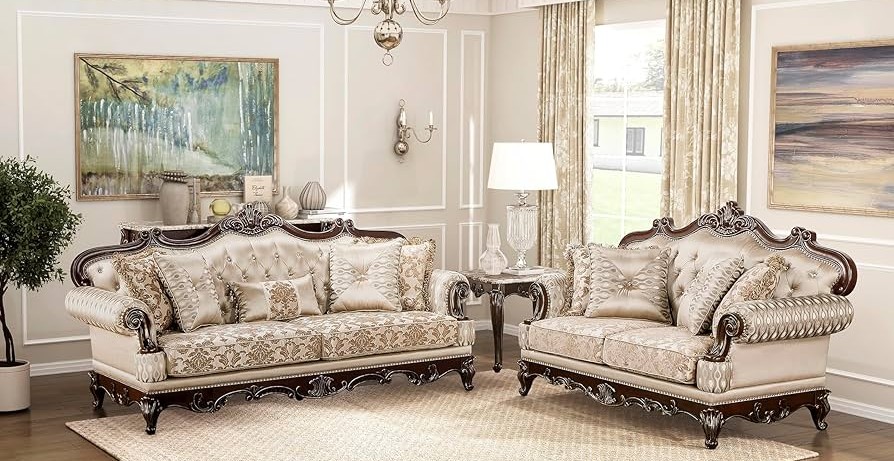
Sofas play a major role in living rooms and family spaces. In Indian homes, they handle daily use, guests, children, and sometimes even sleeping needs. Because of this, choosing the right sofa type and material becomes important.
This guide explains common sofa types, their practical use, and the latest materials that work well in Indian climates. The aim is to help homeowners choose a sofa that suits their space, lifestyle, and long-term maintenance.
Common Sofa Types for Indian Homes
1 Three-Seater Sofa
A three-seater is the standard choice in most apartments.
Best for:
* Living rooms measuring around 10 ft × 12 ft or more
* Families who want a main seating piece
* Balanced space usage without overcrowding
* It works well when paired with a single chair or ottoman.
2 L-Shaped Sofa
L-shaped sofas help utilise corner space.
Practical use:
* Compact flats where layout planning is tight
* Homes that need more seating without extra chairs
* TV rooms where lounging is frequent
Ensure the longer side does not block windows or movement.
3 Sectional Sofa
Sectionals come in detachable pieces.
Advantages:
* Easy to rearrange
* Suitable for large living areas
* Simple to shift during cleaning
* Not ideal for very small apartments due to bulk.
4 Single Seater / Accent Chair
Useful for adding isolated seating.
Best for:
* Reading corners
* Bay window seating
* Flexible arrangements in medium-size living rooms
* Accent chairs help fill empty corners without overwhelming the space.
5 Sofa Cum Bed
Common in smaller homes or guest rooms.
Benefits:
* Provides extra sleeping space
* Saves room in 1BHK and compact 2BHK flats
* Good for families that have frequent visitors
* Choose a mechanism that is easy to open and close.
Latest Sofa Materials and Their Practical Use
1 Fabric Sofas
Fabric remains the most common choice.
Why it works:
* Comfortable in Indian climate
* Wide choice of colours and textures
* Better breathability compared to leather
Maintenance Tip:
Choose removable covers or stain-resistant fabrics for daily use homes.
2 Microfiber
Microfiber has become popular for its low maintenance.
Advantages:
* Easy to clean
* Good for homes with children or pets
* Less prone to fading
It gives a neat, uniform look suitable for modern flats.
3 Leatherette (PU Leather)
Leatherette offers a clean and smooth finish.
Practical benefits:
* Budget-friendly compared to leather
* Simple to wipe
* Works well in air-conditioned rooms
Limitations:
May peel in very humid areas or under direct sunlight.
4 Genuine Leather
A long-lasting material when properly maintained.
Best suited for:
Homes with controlled indoor temperature
Families who prefer premium materials
Spaces with minimal direct sunlight
It requires conditioning and is higher in cost.
5 Velvet and Suede
These are seen more in modern interiors.
Good for:
Formal living rooms
Low-traffic areas
Spaces with minimal dust
Practical note:
They attract dust, so regular vacuuming is needed.
6 Performance Fabrics (Newer Material Trend)
Performance fabrics are designed for durability.
Features:
* Stain-resistant coating
* Fade-resistant
* Easy maintenance
* Ideal for families with children, pets, or heavy usage.
3. Sofa Frame Materials
A sofa’s strength mainly depends on its frame.
1 Solid Wood Frame
Common in Indian homes.
Benefits:
* wHandles eight well
* Suitable for frequent usage
* Hardwoods like teak and neem last longer.
2 Engineered Wood Frame
Used in budget or lightweight sofas.
Pros:
Cost-effective
Works for low to medium usage spaces
Not recommended where heavy load or daily usage is expected.
4. Cushion Materials
1 High-Density Foam
Most reliable for long-term use.
Benefits:
Holds shape well
Provides firm support
Comfortable for long sitting hours
Memory Foam Layering
Often added for extra softness.
Works well for:
Seating that requires comfort
Lounger-style sofas
Not advisable for very soft sofas, as they may lose structure.
Feather or Fibre Fill
Used for back cushions.
Gives:
Soft comfort
A relaxed look
Regular fluffing is needed to maintain shape.
5. Practical Factors to Consider Before Choosing a Sofa
1 Room Size and Layout
Measure the room clearly.
A three-seater needs at least 6–7 ft length.
An L-shaped requires around 8–9 ft of clear wall space.
2 Movement and Doorway Size
Always check the width of doors and staircase turns.
Large sofas often face delivery challenges in apartments.
3 Usage Pattern
Daily-use homes require durable fabrics and firm cushions.
Formal living rooms can handle softer materials.
4 Maintenance
Homes with dust, pets, or children should choose easy-to-clean fabrics over delicate materials.
5 Budget
Costs vary based on:
* Fabric type
* Frame material
* Cushion quality
* Brand and craftsmanship
* City-wise labour and transportation
* Fabric sofas are budget-friendly.
* Leather and solid wood increase costs due to material strength and workmanship.
Conclusion
Choosing a sofa becomes easier when you understand your room size, daily usage, and maintenance expectations. Most Indian homes benefit from simple, durable materials and practical layouts.
By focusing on comfort, structure, and fabric quality rather than trends, homeowners can select a sofa that supports long-lasting use and suits their living space well.

