


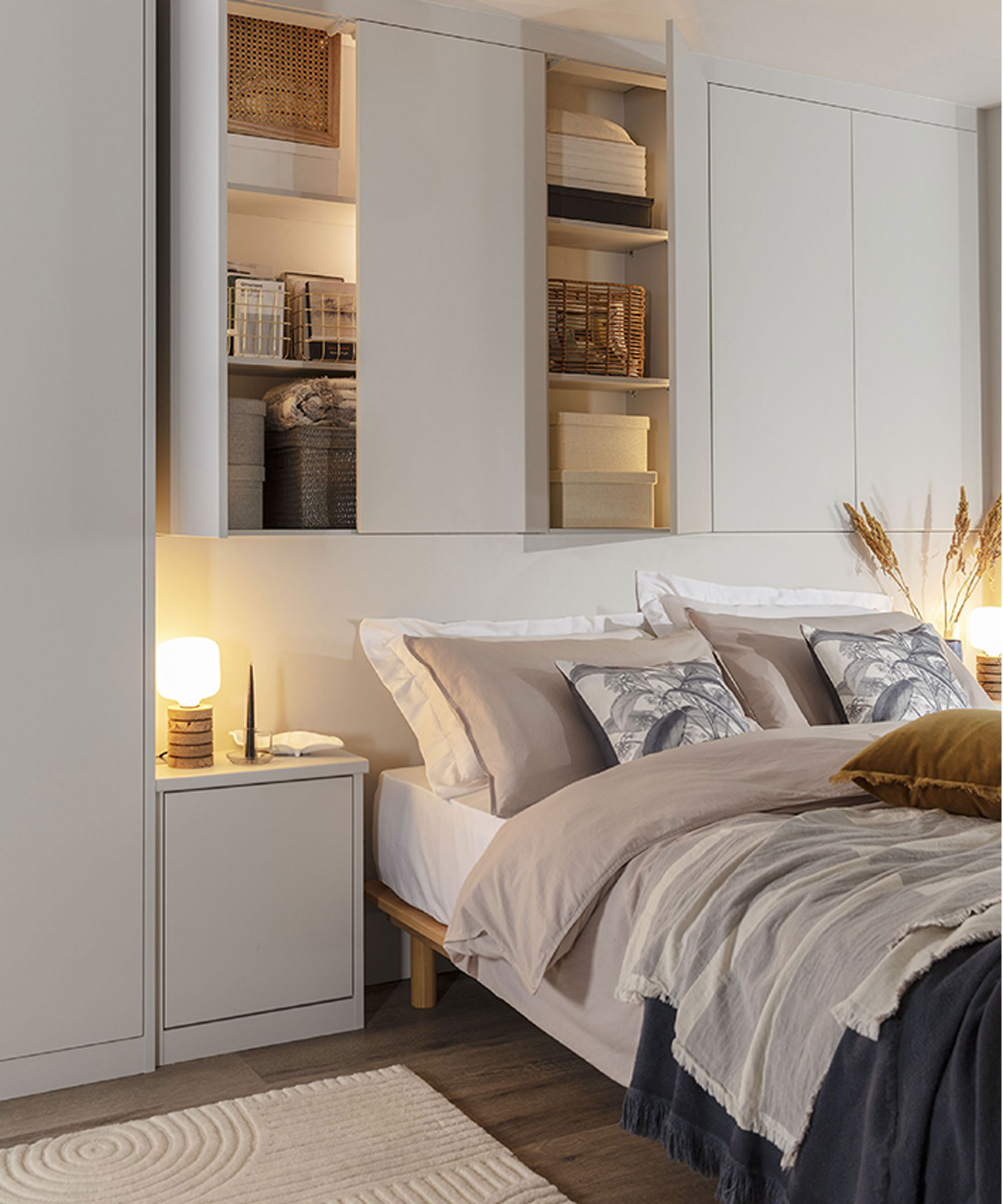
Bedrooms in Indian apartments usually range between 100 and 140 sq. ft., which makes storage planning important. Homeowners need space for clothes, bedding, luggage, and daily essentials without crowding the room.
This guide explains practical bedroom storage ideas that work well in Indian conditions, focusing on ease of use, durability, and long-term maintenance.
1. Use the Bed as Main Storage
The bed is the largest furniture item, so using it for storage helps save space.
Types of bed storage
Box storage: Simple, durable, and cost-effective.
Hydraulic storage: Easier to lift; good for heavy bedding and suitcases.
Drawer storage: Useful if you need quick access without lifting.
Practical tips
Choose hydraulic only if you need frequent access.
Keep mattress height around 24–26 inches for comfortable use.
2. Plan an Efficient Wardrobe Layout
Wardrobes should take care of most everyday storage.
Standard measurements
- Depth: 2 feet
- Height: 7–8 feet
- Shutter width: 18–24 inches for smooth opening
Useful internal sections
- Hanging space: 3'6"–4' for shirts and dresses
- Shelves: 12–15 inches high for folded clothes
- Drawers: For valuables, accessories, and innerwear
- Lofts: For luggage and seasonal blankets
Material recommendations
- Plywood with laminate is durable and low maintenance.
3. Use Overhead Storage for Luggage
Overhead cabinets above the wardrobe make use of vertical height.
Benefits
- Stores items that are not used daily.
- Keeps the main wardrobe free for easy access.
- Helps small rooms feel organised.
Practical note
Avoid making overhead cabinets too deep; 12–18 inches is enough.
4. Add a Dresser with Concealed Storage
A dresser can be more than a mirror unit.
Useful features
- Slim side shelves for skincare and daily items.
- Bottom drawers for documents and smaller essentials.
- Wall-mounted mirrors to save floor space.
Suitability
Works well in medium and large bedrooms.
5. Use Wall Shelves for Light Storage
- Wall shelves are useful when floor space is limited.
- Where to place them
- Above the study table.
- Beside the wardrobe.
- Opposite the bed.
Tips
Keep shelves 8–10 inches deep to avoid protruding into walking space.
Avoid placing too many items to keep the room visually calm.
6. Corner Storage for Dead Spaces
Corners are often unused in bedrooms.
Options
- Tall corner shelf units
- Small corner tables with drawers
- Corner wardrobes in larger rooms
Corner shelves should be kept light and simple to avoid crowding.
7. Under-the-Window Storage Bench
A small bench below the window can provide both seating and storage.
Benefits
- Works well in rooms with bay windows or wider sills.
- Stores light items like cushions, toys, or laundry.
- Keep the bench height around 18 inches for comfortable seating.
8. Use Multi-Purpose Furniture
Compact rooms benefit from furniture with dual functions.
Examples
- Bedside table with 2–3 drawers
- Study table with overhead shelves
- Ottoman with storage inside
- Folding work table attached to the wall
- This helps reduce the number of individual furniture pieces.
9. Create a Niche for Extra Storage
If you are planning renovation, a niche can be built into the wall.
Practical uses
- Books
- Small decor
- Night-time essentials
Measurements
- Depth between 6 and 10 inches depending on wall thickness.
- Avoid niches on plumbing walls to prevent leakage issues.
10. Use the Space Behind the Door
The back of the bedroom door can store small everyday items.
Ideas
- Hooks for bags and scarves
- Slim organiser racks
- Over-door storage pockets
- This keeps the room clutter-free without affecting movement.
11. Drawer Units Under the TV Panel
If you have a TV panel in the bedroom, add a small drawer unit below it.
Uses
- Bed linens
- Remote controls
- Chargers and small gadgets
- Depth of 12 inches is usually enough.
- Common Mistakes to Avoid
- Choosing too many storage units in a small room.
- Making wardrobes too deep; 2 feet is usually enough.
- Using open shelves excessively, leading to dust accumulation.
- Blocking windows with storage units and reducing natural light.
- Ignoring access space around the bed.
Maintenance Tips
- Keep wardrobe interiors dry to avoid mould.
- Use soft-close hardware to reduce long-term wear.
- Clean laminate surfaces with a dry cloth.
- Check drawer channels annually to ensure smooth movement.
FAQs
1. What is the most effective storage for small bedrooms?
Beds with storage and well-planned wardrobes provide maximum usable space.
2. How can I increase storage without crowding the room?
Use vertical height—overhead cabinets, wall shelves, and tall units.
3. Are hydraulic beds durable?
Yes, if good-quality hardware is used. They are easier to open than box beds.
4. How deep should wardrobes be?
A depth of 2 feet is standard and works for most clothes.
Conclusion
Bedroom storage should be planned with daily convenience in mind. In Indian apartments where space is limited, simple planning and thoughtful furniture placement can create efficient storage without making the room feel heavy.
Using the bed, wardrobe, vertical height, and multi-purpose furniture helps maintain a clean and organised bedroom suitable for long-term use.
Why Choose Our Interior Studio for Bedroom Storage Planning?
At our interior studio, we design bedroom storage solutions that maximise space without affecting comfort or movement. We study room layout, bed size, wardrobe placement, and daily storage needs before planning any storage elements. This ensures efficient use of space in Indian homes, especially where room sizes are limited.
Our team focuses on smart storage options such as lofts, under-bed storage, wall units, and customised wardrobes. Proper planning avoids clutter and makes daily use more convenient. With our professional interior expertise, bedroom storage remains organised, accessible, and well-integrated into the overall design.

