


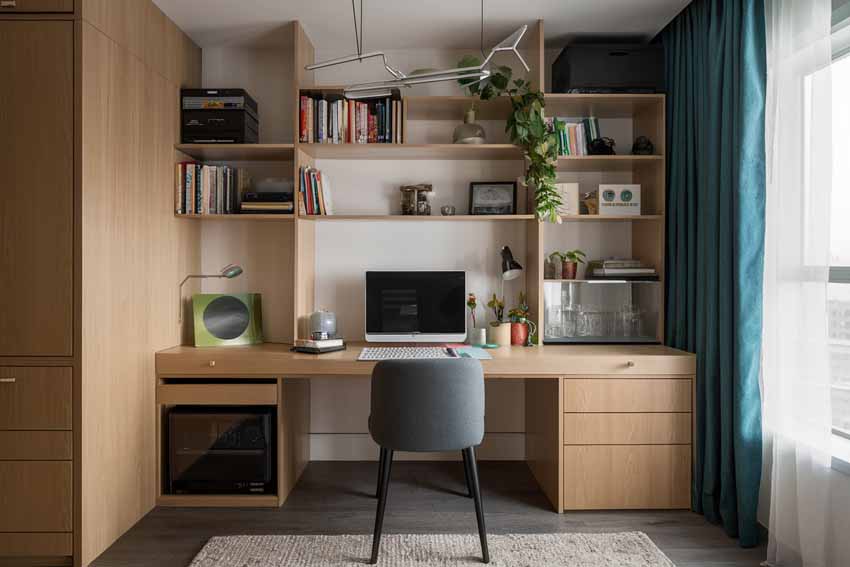
A study table is more than a flat surface. It must support posture, storage, lighting, and daily routine. In Indian homes, space and budget often limit choices. A well-planned table that fits the room and the user’s needs gives better concentration and lasts longer. This guide focuses on practical designs and realistic decisions you can apply right away.
1. Who will use the table? Pick the right type
Choose design according to user and usage.
- Kids (5–12 years): Smaller height, simple storage for books and stationery.
- School / College student: Space for laptop, books, and writing; medium storage.
- Work-from-home / Professional: Larger work surface, cable management, filing space.
- Multi-use (study + dining / guest): Foldable or wall-mounted options.
2. Standard measurements (use these as baseline)
- Table height: 28–30 inches (standard) for adults. For kids reduce by 2–4 inches depending on age.
- Knee clearance: 24–26 inches from floor to underside of table.
- Depth (front to back): 20–24 inches for laptop + writing; 30 inches if you need dual monitors.
- Width:
- Compact single user: 3–4 ft (36–48 in).
- Comfortable student desk: 4–5 ft (48–60 in).
- Workstations / dual monitor: 5–6 ft (60–72 in).
Shelf heights: Keep the top shelf at least 12–14 inches above the tabletop to avoid head bumps.
Use these to check shop models or when ordering custom carpentry.
3. Common practical designs
- A. Compact Wall-Mounted Desk
- Good for very small rooms or multi-use spaces.
- Fold-up option saves floor space.
- Prefer solid plywood or MDF with laminate finish for easy cleaning.
B. Desk with Overhead Shelves (Hutch)
- Great for students who need upright book storage.
- Keep shelves shallow (10–12 in) to avoid a heavy look.
- Ensure good lighting under the hutch to avoid shadows.
C. L-Shaped Corner Desk
- Uses corner space efficiently.
- Useful for dual use (study + small printer or monitor).
- Keep corner radius gentle so movement is not blocked.
D. Floating Drawer Desk
- Simple tabletop with 1–2 drawers below.
- Works well when storage needs are minimal.
- Easier and cheaper to install.
E. Built-in Study Unit with Closed Storage
- Best for long-term use in children’s room.
- Closed cabinets reduce dust and visual clutter.
- Plan cable holes and ventilation for electronics.
4. Material choices & practicality
- BWR/Marine plywood (carcass): Durable, recommended for humid cities.
- MDF/HDF: Cost-effective, smoother finish; avoid in very damp rooms.
- Laminate finish: Easy to clean, budget-friendly.
- Veneer / PU finish: Better look, higher cost, needs careful maintenance.
- Solid wood: Durable but expensive and sensitive to humidity.
Choose materials based on climate, expected use, and budget. Hardware (drawer channels, hinges) affects long-term performance—don’t compromise.
5. Lighting and ergonomics
- Task light: An adjustable desk lamp with warm-to-neutral light (3000–4000K).
- Screen height: Top of monitor roughly at eye level; use a 4–6 inch riser if needed.
- Chair compatibility: Match desk height with an adjustable chair. Feet should rest flat; knees roughly at 90°.
- Avoid glare: Position desk perpendicular to windows when possible.
6. Cable management & power planning
- Plan 1–2 plug points within 2–3 ft of the desk.
- Include cable grommets or a simple tray under the table.
- Allow ventilation gaps for routers, UPS, or CPUs.
7. Cost factors (realistic ranges and drivers)
- Costs depend on size, material, hardware, and city labour rates.
- Simple tabletop + legs (ready-made): Budget-friendly—good for renters.
- Basic carpentry (ply + laminate) with 1–2 drawers: Mid-range.
- Custom built-in unit (ply, laminate, hutch, drawers): Higher range due to customization and fitment.
- Premium finishes (PU/Acrylic/solid wood): Highest.
Major cost drivers: material grade, number of drawers, hardware quality, finish, and installation labour in your city.
8. Step-by-step planning checklist
- Measure the available wall and circulation space.
- Decide user and primary activities (reading, laptop, drawing).
- Fix minimum dimensions using the standards above.
Choose material and finish suited to climate.
- Plan storage: open shelves for daily use; closed drawers for clutter.
- Plan lighting and electrical points.
- Check delivery and installation access (door, lift).
- Confirm hinge/drawer hardware quality before sign-off.
9. Common mistakes to avoid
- Buying a desk that is too deep for the room, blocking circulation.
- Choosing poor-quality drawer channels (they sag fast).
- Not planning for cables and power outlets.
- Installing overhead storage without checking head clearance.
- Buying a non-adjustable chair with a standard-height desk.
- Ignoring ventilation for electronic equipment.
10. Quick design ideas by room type
- Small bedroom / studio: Wall-mounted foldable desk + floating shelf.
- Kids’ room: Low-height desk (26–28 in), storage bins, rounded edges.
- Student room: 4–5 ft desk, hutch for books, task lamp, notice board.
- Work-from-home: 5–6 ft desk, strong cable management, under-desk CPU shelf, ergonomic chair.
- Shared study (two users): 2-person bench desk (each 3–4 ft), shared overhead shelf.
Conclusion
A good study table is a balance of correct dimensions, suitable materials, and thoughtful storage. Start from the user’s needs and the room’s constraints. Simple, well-measured solutions usually outperform elaborate designs in daily use. Prioritise ergonomics, lighting, and durable hardware—these choices make the desk useful for years.
Why Choose Our Interior Studio for Study Table Design?
At our interior studio, we design study tables that support comfort, focus, and daily usage in Indian homes. We carefully plan the table size, height, leg space, and seating position based on the room layout and user needs. This ensures better posture and a clutter-free work or study environment.
Our team also considers natural light direction, electrical points, storage needs, and wall space before finalising the design. With professional interior planning, the study table blends seamlessly with the room while remaining practical and durable. Our approach helps create a functional workspace that encourages productivity without occupying unnecessary space.

